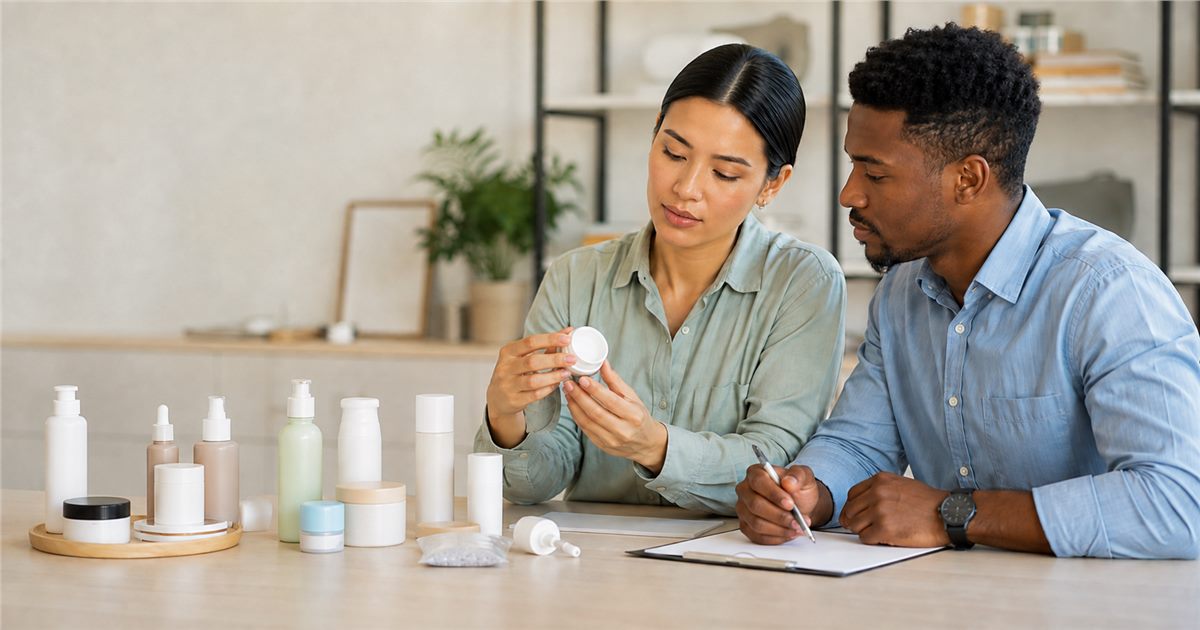
To choose a cosmetic manufacturer, verify the legal facility, GMP system, formula and packaging responsibilities, test plan, batch controls, target-market documents, total landed-cost assumptions, and remedies for failure. Do not pay a deposit based on samples or certificates alone. Convert every promise about quality, MOQ, price, timing, and ownership into a written specification, milestone, or contract term.
Quick Answer: What Should You Check First?
Before paying a cosmetic manufacturer, confirm five things:
- Who will actually manufacture and fill the product? The sales company and production facility may be different entities.
- What evidence supports quality and market readiness? Review current, scope-relevant GMP evidence, specifications, test plans, and sample records.
- What exactly is included in MOQ, price, and timing? Formula, filling, packaging components, decoration, cartons, testing, freight, and duties can have different minimums and lead times.
- Which approved sample controls production? Identify the signed “golden sample,” formula version, packaging version, artwork, and acceptance criteria.
- What happens when something goes wrong? The purchase order should cover nonconforming goods, rework, replacement, delay, complaints, recalls, change control, and record access.
A strong supplier should identify the responsible party, produce evidence, explain limitations, and put the agreed result in writing.
Use an Evidence Gate, Not a Sales-Impression Score
Factory videos, fast replies, and attractive samples can build a shortlist, but they do not prove repeatable production. Apply this evidence gate before comparing price.
| Decision area | Evidence to request before deposit | Acceptable condition | Red flag |
|---|---|---|---|
| Legal identity | Business name, address, contracting entity, production-facility identity | Names and roles match the quotation, invoice, contract, and audit evidence | Payment requested to an unexplained entity or personal account |
| Quality system | Current GMP certificate or audit evidence, scope, issuer, corrective-action status | Scope covers the product and site; limitations are explained | Certificate belongs to another site or product category |
| Product definition | Formula/version, product specification, approved sample, packaging specification, artwork | One controlled version is named in the PO | “Same as sample” with no measurable specification |
| Testing | Written test plan, methods, acceptance criteria, responsible laboratory | Tests match formula, pack, claims, and target market | Generic “all tests passed” statement without records |
| Commercial terms | Itemized quote, MOQ by component, Incoterm, payment milestones, change fees | Assumptions and exclusions are visible | One unit price hides tooling, decoration, testing, or freight |
| Release and remedies | Inspection plan, COA/batch documents, nonconformance and remedy terms | Release evidence and escalation path are defined | Full balance due before any agreed inspection evidence |
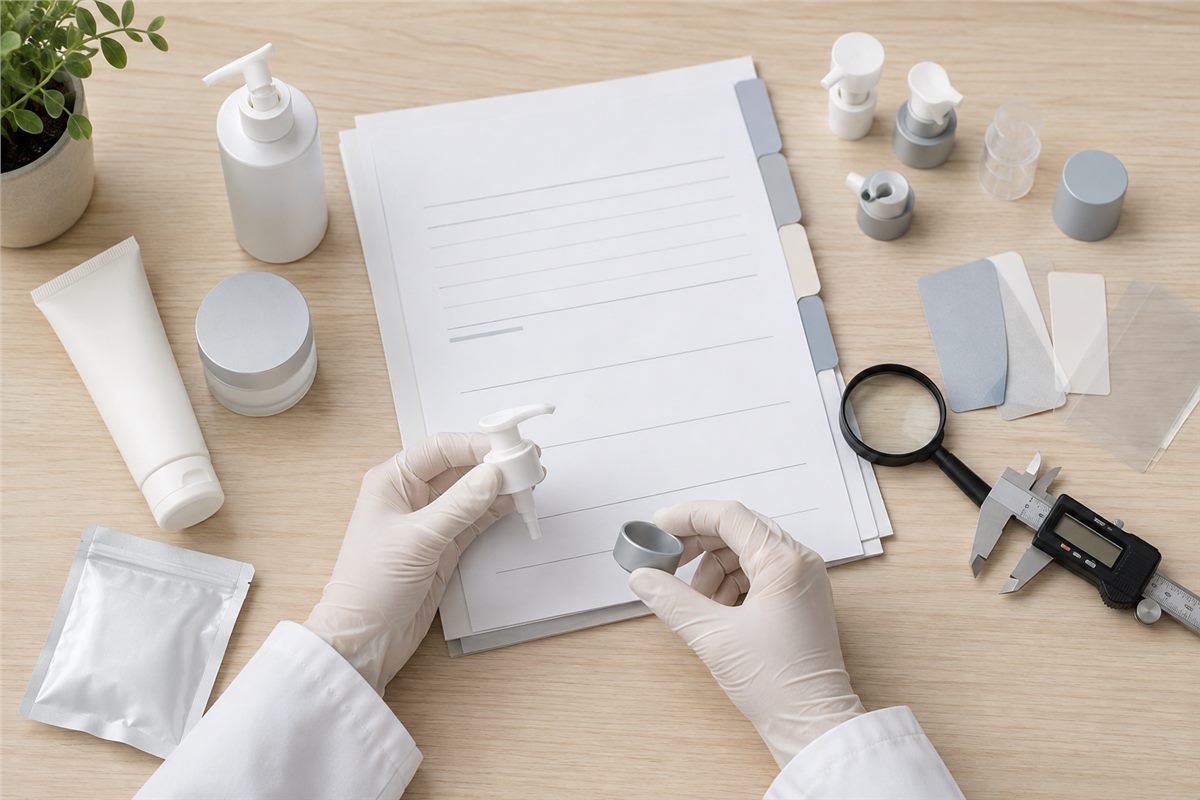
15 Questions to Ask a Cosmetic Manufacturer
1. Which legal entity will contract with us, and which facility will make and fill the product?
Ask for the legal names and addresses of the seller, manufacturer, filler, packer, and critical subcontractors. Check that the quotation, invoice, bank beneficiary, purchase order, and quality documents describe the same supply chain.
Any supply model can work, but the roles must be transparent. The sales contact may not control batch records or corrective actions unless that responsibility is written into the agreement.
2. Are we buying private label, modifying a base, or developing a custom formula?
Define the development route before comparing suppliers. This private label, OEM, and ODM comparison explains the commercial models. A ready-formula project generally limits formula ownership and changes; a modified base adds controlled changes; a custom formula requires a brief, version history, approval process, and clear ownership terms.
Ask who owns the formula, whether the base can be sold to other brands, and what files you receive if the relationship ends. “Custom” should describe specific rights and deliverables.
3. What support is available for our exact destination market and product classification?
Name the country, sales channel, claims, product type, and responsible parties. Do not accept “FDA approved,” “EU certified,” or “Amazon compliant” as a complete answer.
For the United States, FDA says facility registration and product listing are not an approval program. Under MoCRA, applicable facilities register every two years, responsible persons list marketed products and update listings annually, and responsible persons maintain safety-substantiation records. Exemptions do not cover every product category.
For the European Union, Regulation (EC) No 1223/2009 requires an EU responsible person, safety assessment and Cosmetic Product Safety Report, a Product Information File, GMP-compliant manufacture, and CPNP notification. Confirm who performs each task.
4. What GMP evidence applies to this facility and product scope?
ISO 22716:2007 provides cosmetic GMP guidelines for production, control, storage, and shipment; ISO confirmed the standard as current in 2022. Ask for the certificate or audit report, the issuing body, scope, site address, issue and expiry dates, and any open corrective actions. Independently contact the issuer when the risk or order value justifies it.
A certificate is one input, not the conclusion. Review product-specific controls, records, deviations, complaints, subcontracting, and change control.
5. Which specifications and batch records will define an acceptable product?
Request a draft finished-product specification covering relevant sensory, physical, microbiological, fill, packaging, coding, and artwork criteria. Ask which batch records are created and how long they are retained.
A certificate of analysis should report agreed results for a specific batch; it is not a substitute for the full specification, safety substantiation, stability work, or packaging compatibility.
6. What testing plan is required, and who approves it?
Testing should follow product risk, formula, packaging, claims, and destination market. Discuss stability, compatibility, microbiological quality, preservative effectiveness where appropriate, and claim-specific work. FDA does not prescribe one test set for every cosmetic, but adequate safety substantiation must use scientifically robust evidence.
Record the protocol, sample stage, acceptance criteria, laboratory, cost owner, and consequence of failure. A report from a different formula or pack is not proof for the final product.
7. How are ingredients, suppliers, and formula changes controlled?
Ask how incoming materials are identified, sampled, released, traced to batches, and re-evaluated after supplier changes. Require written approval before changes to ingredient grade, supplier, concentration, fragrance, color, preservative system, or processing conditions that could affect the approved product.
Require alerts for restrictions or discontinuations. An unchanged INCI list does not prove that raw-material specifications stayed the same.
8. How will you prove packaging compatibility and component performance?
The formula and primary pack are one system. Ask who owns pump, sprayer, wiper, seal, liner, bottle, jar, sachet film, and carton decisions. Define compatibility checks for leakage, dispensing, clogging, swelling, paneling, corrosion, discoloration, evaporation, label adhesion, decoration rub, and shipping stress as relevant.
Confirm component codes and approved samples; visually similar pumps can deliver different doses or fail with viscous formulas.
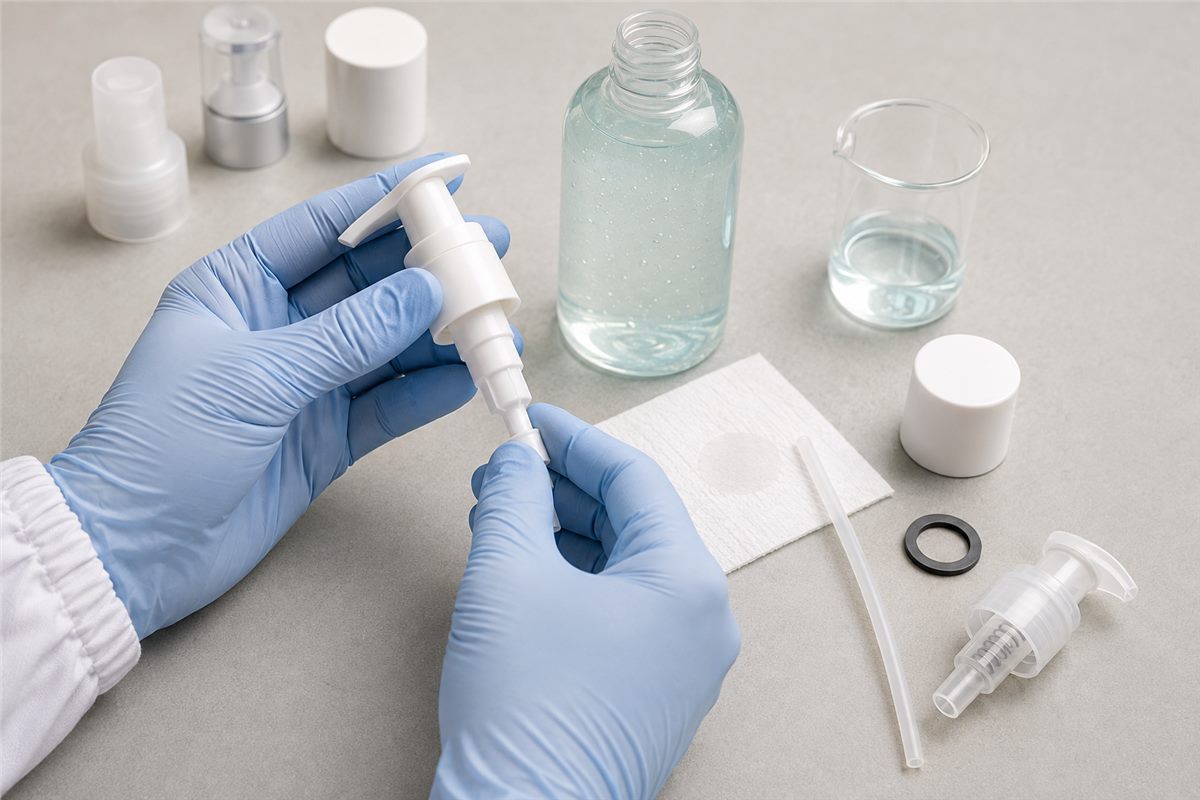
9. What is the MOQ for each layer of the project?
Request separate minimums for formula, filling, packaging, decoration, labels, and cartons. Ask about overruns, leftovers, reorders, and storage.
INHI’s published development solutions say eligible ready-formula, custom-formula, and selected packaging projects can start from 100 units, subject to project feasibility, materials, and process availability. That is not a universal minimum for every formula, component, or decoration method.
10. What does the quoted price include—and exclude?
Normalize quotations to the same scope. Show or exclude formula, filling, components, decoration, tooling, samples, testing, inspection, documents, export packing, freight, insurance, duties, and taxes. Record currency, validity, Incoterm, milestones, and price-revision rules.
Do not choose on unit price until each supplier is pricing the same formula route, pack, quality plan, quantity, trade term, and evidence package.
11. Which sample becomes the production standard?
Define a controlled approval record: formula code and revision, date, color, fragrance, texture, measurable specifications, fill quantity, component codes, decoration, artwork version, and approver. Retain sealed reference units where practical.
Document any production change and decide whether resampling, compatibility work, or revised testing is necessary. An unlabeled lab sample cannot control mass production.
12. What starts the lead-time clock, and which approvals are on the critical path?
Request a milestone plan from brief confirmation through samples, testing, artwork, procurement, production, release, and shipment. State the approvals that start each step.
INHI publicly states that eligible samples can typically be prepared within seven days after the brief is confirmed and that qualified inquiries receive an initial response and quotation within 24 hours. Production timing still depends on formula, testing, packaging, quantity, and approvals; the project quotation should provide the applicable schedule.
13. What inspections and release evidence will we receive?
Define incoming, in-process, filling, packaging, and finished-goods checks, including inspection scope, defect classes, acceptance criteria, evidence, and shipment authority.
Before paying the balance, confirm the finished-product COA, batch identity, quantity reconciliation, packaging inspection, test reports, and shipping documents. “QC passed” is not measurable.
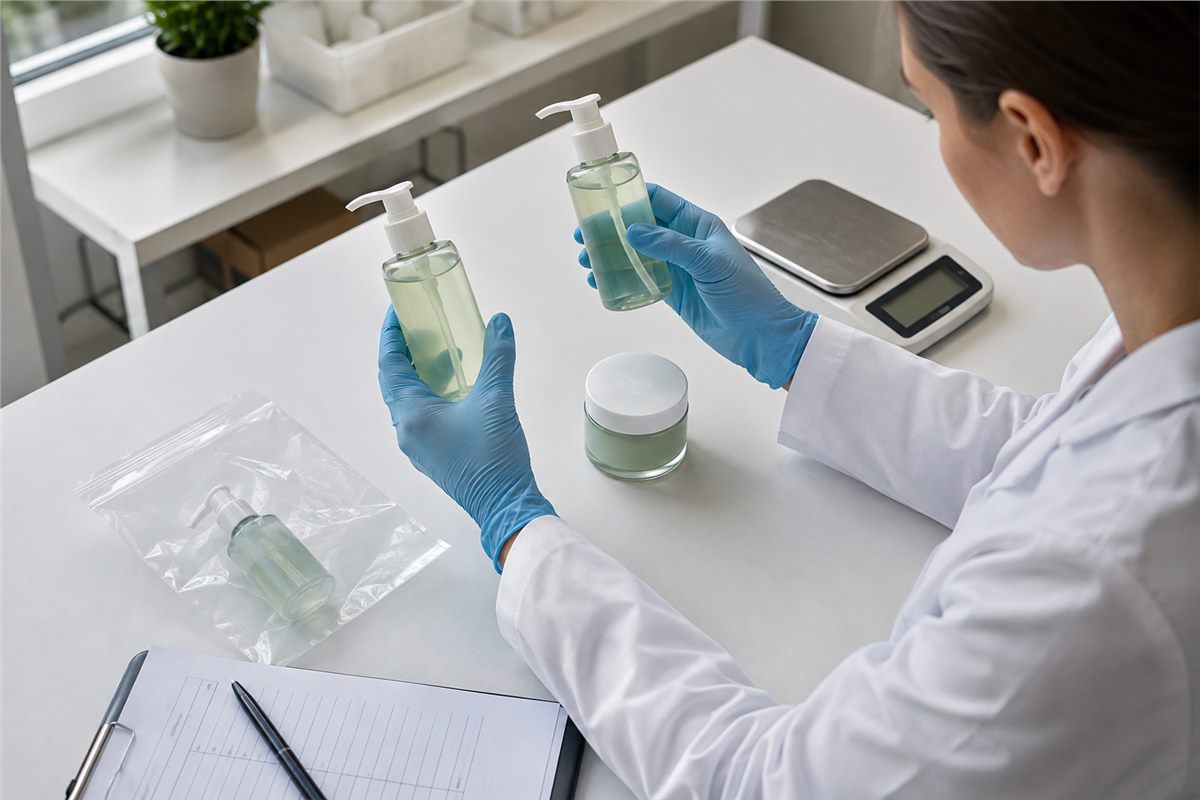
14. How are deviations, complaints, adverse events, and recalls handled?
Define escalation, investigation timing, corrective action, retained-sample access, traceability, and remedies for rework, replacement, delay, freight, and disposal.
For U.S. products, the responsible person must report serious adverse events to FDA within 15 business days and submit certain new medical information received within one year. Choose a manufacturer that can preserve batch and distribution evidence and support a timely investigation, while recognizing that the brand or other label-named responsible person retains its own duties.
15. What do we own, and what can we take to another supplier?
Define ownership and permitted use of formula work, artwork, packaging drawings, molds, tooling, test reports, specifications, photography, and regulatory files. State whether exclusivity applies, to which territory or channel, for how long, and subject to what purchase commitment.
Cover confidentiality, data access, subcontracting, tooling storage, termination, transition, and files needed for complaint investigations or supplier changes.
The Manufacturer’s View: What a Quote-Ready Buyer Should Provide
A reliable quote requires more than “I need a face serum.” Use INHI’s planning insights hub as a briefing reference and provide:
- product type and benchmark;
- target market and sales channel;
- intended claims and audience;
- ready-formula, modified-base, or custom-formula preference;
- packaging format and decoration direction;
- first-order quantity and 12-month forecast;
- target launch date and required sample date;
- required testing, documents, inspection, and delivery term; and
- target cost or retail position, clearly labeled as a target rather than an agreed price.
This exposes trade-offs early: a custom pump color may create a higher minimum than filling, while a stock component may shorten procurement.
Common Mistakes and Procurement Risks
Paying for a certificate instead of checking its scope
Verify the site, entity, scope, dates, and issuer; a genuine certificate can still be irrelevant.
Approving appearance without measurable specifications
Pair sensory approval with relevant physical, microbiological, fill, pack, and artwork criteria.
Comparing quotations with different assumptions
Build a line-by-line comparison; one quote may include testing and decoration while another covers only filling.
Treating registration as product approval
FDA says registration and listing are not approval or certification; do not treat filings as quality endorsements.
Leaving change control until after the first problem
Require advance notice and approval rules for substitutions before materials are ordered.
Paying too much before objective release evidence exists
Tie payments to deliverables and inspection rights; preserve remedies for documented nonconformance.
Before You Pay the Deposit: Six Go/No-Go Checks
Proceed only when all six answers are “yes”:
- Identity: The contracting, payment, and manufacturing entities are known.
- Definition: Formula route, specification, packaging, artwork, and approved sample are controlled.
- Market: Responsible parties and target-market files are assigned.
- Commercial: MOQ layers, inclusions, exclusions, Incoterm, and payment milestones are written.
- Quality: Test, inspection, release, change-control, and record-access requirements are agreed.
- Remedy: Delay, deviation, nonconformance, complaint, recall support, and ownership terms are documented.
If one of these is missing, delay the deposit or narrow the purchase order to a paid development or verification milestone rather than full production.
Frequently Asked Questions
Should I choose a cosmetic manufacturer based on ISO 22716 certification?
Use ISO 22716 evidence as an important input, not a standalone decision. Confirm the certificate’s site, scope, issuer, and validity, then assess product-specific controls, records, testing, traceability, and corrective actions.
Is an FDA-registered cosmetic facility automatically compliant?
No. FDA states that facility registration and product listing are not product approval programs and do not create approval certificates. Registration does not replace safety substantiation, labeling, GMP, adverse-event, or other applicable responsibilities.
What is a reasonable cosmetic manufacturing MOQ?
There is no universal MOQ. Bulk formula, filling, primary packaging, decoration, cartons, and material pack sizes may each create a different minimum. Compare the MOQ for your exact approved configuration and reorder plan, not a homepage headline alone.
How long should cosmetic product development take?
The schedule depends on the development route, number of sample rounds, formula risk, testing, packaging procurement, artwork approval, quantity, and release requirements. Ask for a milestone schedule with a defined start condition instead of relying on one headline lead time.
When should I pay a cosmetic manufacturer’s deposit?
Pay only after the contracting entity, scope, specification, approval milestone, price assumptions, payment terms, quality plan, schedule, and remedies are documented. Use legal and quality review for higher-risk projects.
Conclusion: Turn Promises Into Controlled Deliverables
Make the decision auditable: identify the facility, define the product and market obligations, test the formula-packaging system, separate MOQ and cost layers, and connect payments to approved evidence. Clear constraints are more useful than automatic agreement.
If you have a product category, target market, first-order quantity, benchmark, and launch date, send INHI a project brief to receive a route recommendation and initial quotation. Final feasibility, MOQ, price, testing, documentation, and production timing are confirmed for the specific project.
Sources and References
- U.S. Food and Drug Administration, Modernization of Cosmetics Regulation Act of 2022 (MoCRA)
- U.S. Food and Drug Administration, Registration & Listing of Cosmetic Product Facilities and Products
- U.S. Food and Drug Administration, Product Testing of Cosmetics
- European Commission, Regulation (EC) No 1223/2009 on cosmetic products
- European Commission, Cosmetic Product Notification Portal
- International Organization for Standardization, ISO 22716:2007 — Cosmetics — Good Manufacturing Practices
- Google Search Central, Creating helpful, reliable, people-first content
- INHI Cosmetics, Capabilities, Solutions, Compliance, and Start a Project
Last updated: September 6, 2026.