The face mask manufacturing process converts a controlled product brief into a repeatable formula–substrate–package system. A commercial batch should not move straight from mixing to shipment: formula approval, incoming inspection, compounding, in-process checks, filling, sealing, finished-product testing and documented release create the path from concept to a saleable sachet.
Last updated: September 22, 2026.
Quick Answer: What Are the Main Face Mask Manufacturing Steps?
A sheet-mask project normally follows ten controlled stages: define the product and market; develop or select the formula; choose the substrate and sachet; approve a final-system sample; qualify incoming materials; compound the serum; test and release the bulk; cut, fold and load the mask; fill, seal and code the sachet; then inspect, test, release and pack the finished batch.
The stages are connected. Changing the serum, mask fabric, liquid load, sachet laminate or seal conditions can affect stability, microbiological control, user experience and pack integrity. Buyers should approve the complete system rather than approving each part in isolation.
INHI publicly presents custom face masks across sheet, hydrogel, cream and peel-off concepts. This guide focuses on the sheet-mask route packed as a single-use sachet; hydrogel and peel-off formats require different forming and processing controls.
Face Mask Production Map and Release Gates
| Stage | Main output | Typical control point | Release evidence to request |
|---|---|---|---|
| 1. Commercial and regulatory brief | Approved product target | Market, claims, use, quantity and launch assumptions | Signed brief and responsibility matrix |
| 2. Formula route | Development formula | Ingredient suitability, sensory target and safety-data gaps | Version-controlled formula and sample record |
| 3. Substrate and package selection | Proposed complete system | Fabric fit, serum load, laminate, seal area and artwork space | Component specifications and compatibility plan |
| 4. Final-system sample | Golden sample | Fit, unfolding, drip, residue, odor, appearance and seal | Written sample approval and retained standard |
| 5. Incoming qualification | Released raw materials and components | Identity, condition, quantity, lot and specification | Receiving record, status label and supplier documents |
| 6. Compounding | Homogeneous bulk serum | Addition order, time, temperature, mixing and sanitation | Batch manufacturing record and in-process results |
| 7. Bulk hold and QC | Released bulk | Appearance, odor, pH or other formula-specific limits | QC disposition and bulk release authorization |
| 8. Converting and loading | Filled mask format | Cut, fold, orientation, fabric weight and serum amount | Line checks and fill-weight records |
| 9. Sachet sealing and coding | Closed sale unit | Seal cleanliness, temperature, pressure, time and code legibility | Seal checks, code verification and reconciliation |
| 10. Finished release and packing | Saleable batch | Pack integrity, count, appearance, microbiology and required testing | Finished-product release, retain sample and shipment record |
This table is a procurement framework, not a universal test protocol. The actual controls and acceptance limits must be defined for the formula, package, intended use, market and quality system.
1. Lock the Product Brief Before Development
The brief should identify the market, consumer, claims boundary, mask format, sensory target, sales channel, first-order quantity, delivery destination and required documents. It should also name who controls artwork, safety assessment, product notification or listing, import responsibilities and final release.
A vague request such as “a hydrating mask for Amazon” leaves too many variables open. A controlled brief states the formula route, substrate, dimensions, serum load, sachet, carton, evidence, quantity breaks and launch constraints.
Claims belong in the first stage. In the United States, treatment, prevention or body-structure claims may move a product beyond the cosmetic category. Review the concept before printing film.
2. Select or Develop the Formula
An existing formula may shorten development if its composition, evidence and supply fit the new mask system and market. A modified base can require new stability, compatibility or safety work; a custom formula adds formulation, sourcing, sampling and scale-up decisions.
FDA does not prescribe one test list for every cosmetic. The manufacturer or distributor remains responsible for safety under labeled or customary use, so testing follows composition, packaging, exposure and evidence gaps—not a generic certificate bundle.
For a water-rich mask serum, microbiological control deserves early attention. FDA identifies contaminated water or ingredients, poor manufacturing conditions, ineffective preservation, inadequate packaging, and poor shipping or storage as contamination routes. Preservative strategy, water quality, sanitation, packaging and testing must work together.
3. Engineer Formula, Fabric and Sachet as One System
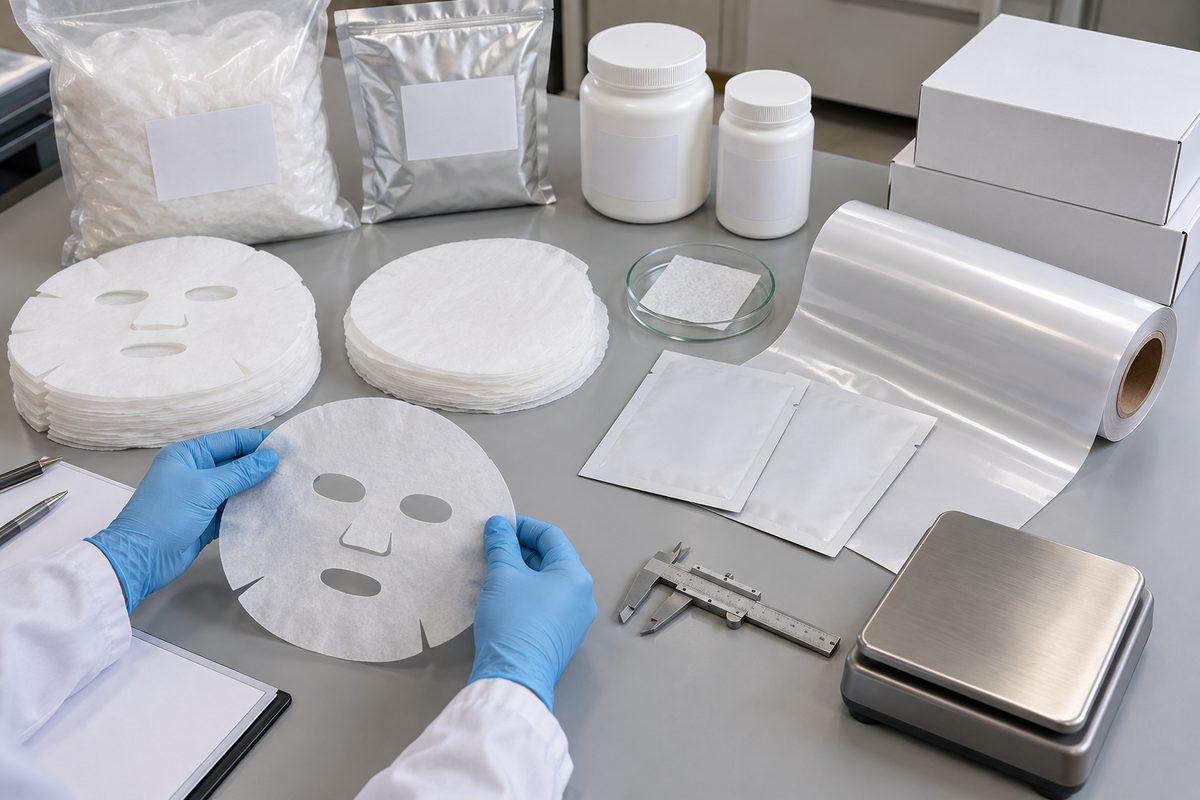
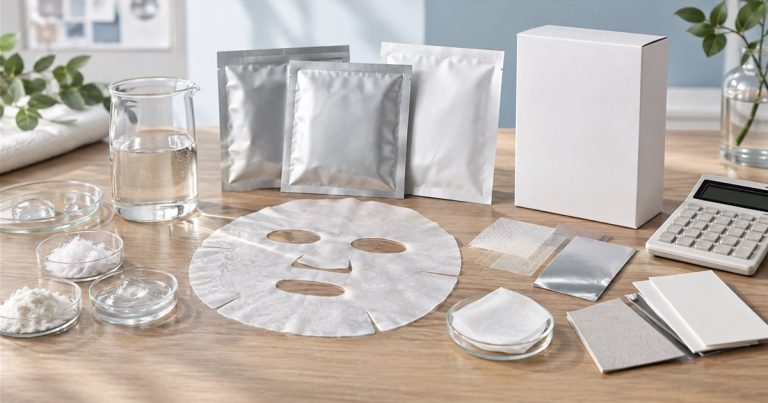
AI-generated educational illustration of generic incoming materials; not approved INHI components, supplier documents or a receiving area.
The substrate changes liquid pickup, unfolding, face fit, wet strength, skin contact and residue. Nonwoven fibers, bio-cellulose and hydrogel are not interchangeable production inputs. Use the sheet-mask fabric and serum decision guide to compare material behavior before locking a die line or serum load.
The sachet must support the formula, required barrier, seal process, opening experience, printing and distribution conditions. Film structure, dimensions, seal width, tear feature and coding area should be specified. Compatibility work should use the intended formula, substrate, load and final laminate—not a convenient substitute.
Confirm the labeled net contents and the operational fill target separately. A manufacturer may need an internal target and tolerance that consistently meets the declared quantity after normal process variation, but the exact control method must be defined by the responsible technical and regulatory teams.
4. Approve a Final-System Sample and Freeze the Specification
The approval sample should use the intended formula, substrate, dimensions, fold, load and representative sachet. Review appearance, odor, fit, unfolding, handling, drip, residue and opening, then record observations rather than relying on “looks good.”
Approval should create a controlled formula version, component specifications, artwork revision, acceptance criteria and retained reference. Later fragrance, fabric or laminate changes need documented assessment.
5. Qualify and Release Incoming Materials
Raw materials, substrates, sachet film, cartons and labels should have traceable identities and specifications. Receiving checks commonly cover supplier, item, quantity, condition, code, expiry or retest information and required documents.
Materials should remain controlled until accepted. A certificate of analysis supports review but does not replace identity, condition, specification or risk-based verification. Printed components need revision control so obsolete copy does not reach the line.
6. Compound the Serum Under a Controlled Batch Record
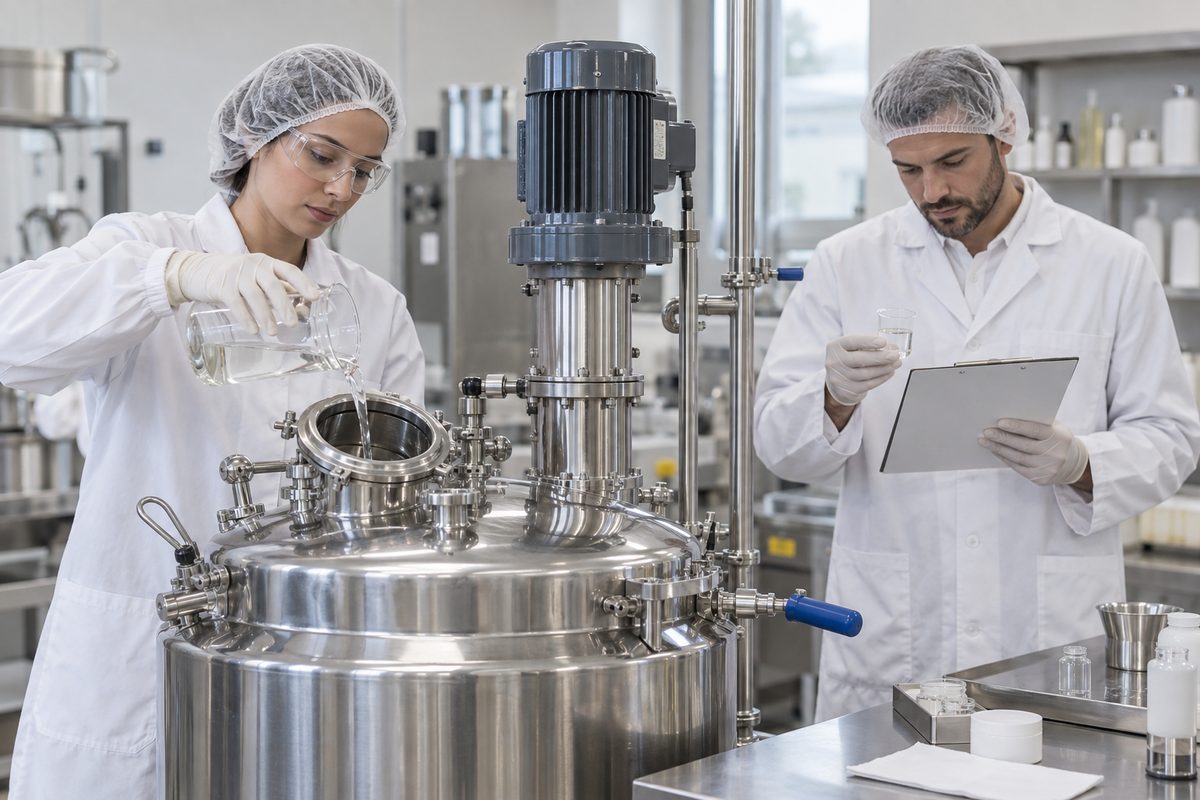
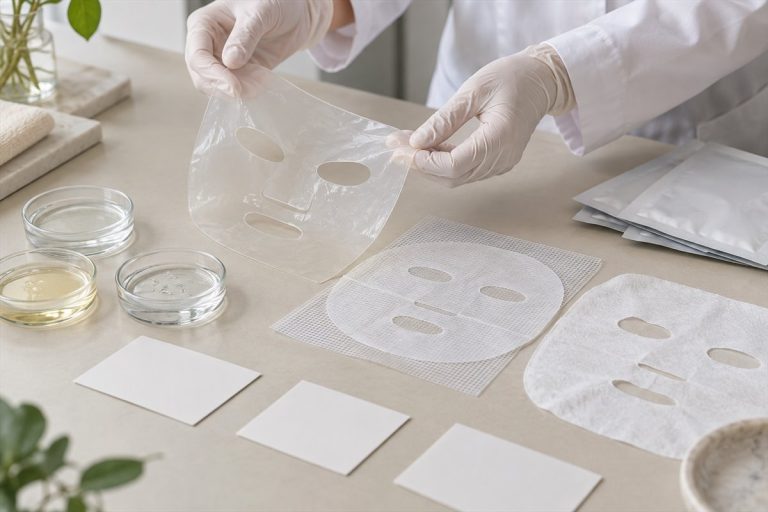
AI-generated editorial illustration; not an INHI mixing vessel, laboratory, employee, batch record or test result.
Compounding translates the approved formula into repeatable bulk. The record should specify equipment, batch size, material lots and quantities, addition order, mixing conditions, hold points and yield reconciliation. Operators should record deviations when they occur.
Temperature, shear, addition rate and mixing time may affect solubility, viscosity, foam, appearance and ingredient integrity. These parameters are formula-specific; request the approved method and release criteria rather than universal numbers.
Cleaning, sanitation, water controls and line clearance help prevent contamination. ISO 22716:2007 remains current and covers quality aspects of production, control, storage and shipment. Confirm the site and quality system for the actual order.
7. Hold and Test the Bulk Before Filling
Finished bulk should be identified and held until authorized for use. In-process or bulk checks may include appearance, odor, pH, viscosity, specific gravity or other formula-relevant characteristics. The approved specification should define methods, limits, sampling and disposition.
Passing a few physical checks is not a safety conclusion. Stability, microbiological quality, preservative performance, packaging compatibility and claims support may require separate programs using the final or representative product. Test timing should be built into the project plan so production is not booked on the assumption that every result will be immediate.
8. Cut, Fold and Load the Mask
Substrate converting can include cutting, eye and mouth openings, carrier layers, folding and transfer to the sachet. Line controls should verify material identity, dimensions, orientation, fold and cleanliness. Foreign-material prevention and line clearance matter because the open substrate and package are exposed during handling.
The serum is then dosed into the sachet with the folded mask. Fill control should account for equipment capability, foam, product behavior and labeled quantity. Periodic checks should be recorded and linked to the batch and time window so a deviation can be isolated rather than forcing a decision on the entire run.
9. Seal, Code and Inspect Every Pack-Out Change
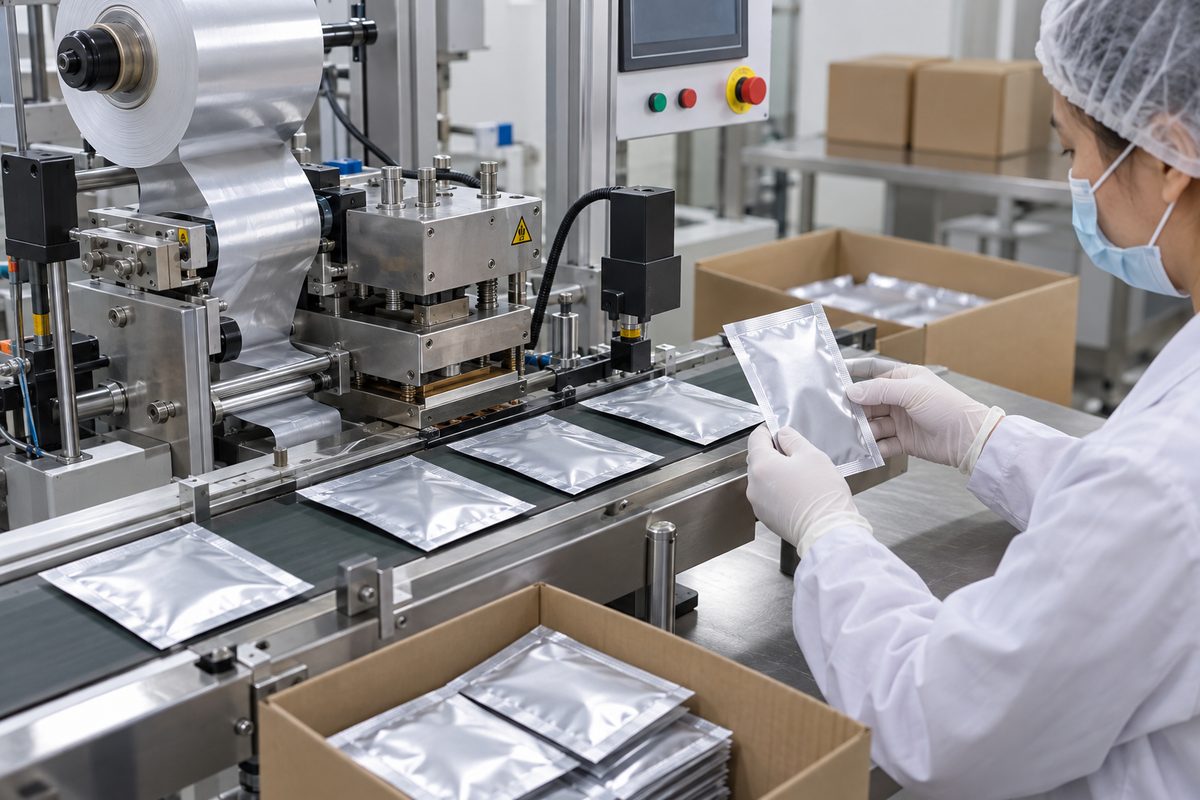
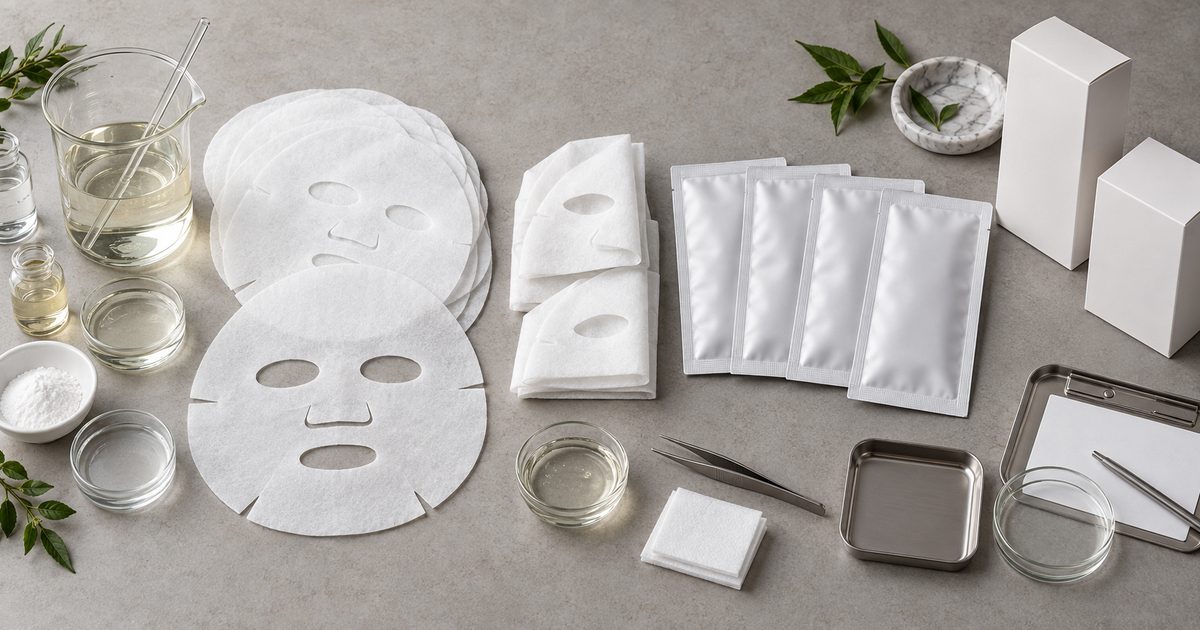
AI-generated editorial illustration of a generic packaging process; not an INHI line, facility, production capacity or customer batch.
A clean, continuous seal is essential for a liquid-filled sachet. Product in the seal area, wrinkles, incorrect temperature, pressure or dwell conditions, damaged film and poor alignment can compromise the package. Start-up, restart and periodic seal checks should use defined methods and acceptance limits.
Lot or batch coding connects the sale unit to the manufacturing record and complaint or recall process. Verify code content, position and legibility against the approved specification. Printed film, cartons and finished units should be reconciled so unexplained quantities and mixed revisions are investigated.
10. Release, Pack and Ship the Finished Batch
Finished inspection can cover appearance, count, code, seal, fill, carton and case configuration. Review required results and records before release; retain representative, traceable samples.
Shipping belongs in the product system. FDA notes that poor shipping or storage can contribute to contamination, so temperature exposure, compression and distribution route may affect packaging validation.
A commercial deadline does not replace authorized batch disposition, and a supplier’s “ready” message is not a completed release package.
How Formula Route Changes Process, MOQ and Timing
| Development route | What may be reused | What still needs confirmation | Common schedule or MOQ constraint |
|---|---|---|---|
| Eligible ready formula | Existing formula and some supporting data | Exact INCI, evidence, substrate fit, package compatibility, label and market | Binding minimum may come from film, fabric or carton rather than formula |
| Modified base | Core formula platform | Effect of fragrance, color, viscosity or highlighted-ingredient changes | New sample, raw-material minimum or additional testing may be required |
| Custom formula and packaging | Project brief only | Formula, scale-up, evidence, substrate, laminate, artwork and specifications | Development, testing, tooling and custom print each add separate gates |
INHI’s current public project pages state that eligible ready-formula, custom-formula and packaging projects can start from 100 units, eligible samples can be prepared within seven days after the brief is confirmed, and the initial scope and quotation are provided within 24 hours. These are qualified entry and response statements—not guarantees that every custom formula, substrate, printed film, carton, test program or production batch fits those figures.
Cost follows the same dependency chain. Formula work, raw materials, substrate, sachet printing, cartons, testing, conversion, inspection and freight may each have separate minimums or one-time charges. The sheet-mask manufacturing cost guide explains how to compare suppliers on landed cost per saleable unit rather than one headline price.
Regulatory and Documentation Checkpoints
For the United States, required facilities register with FDA and renew biennially; the responsible person lists each marketed cosmetic and provides annual updates. Registration or listing is not approval, and FDA does not issue certificates proving compliance. Assign responsibilities before production.
U.S. labels need product identity, net contents and other required information; retail cosmetics generally require an ingredient declaration. Check final artwork against formula, fill, claims, warnings and business information before printing.
For the European Union, the Cosmetics Regulation consolidated through May 18, 2026 requires GMP, a safety assessment/report, a Product Information File and pre-market notification. The PIF includes the manufacturing method, GMP statement and, where justified, claims evidence; a COA or SDS does not replace it.
Common Manufacturing and Procurement Mistakes
- Approving the serum but not the fabric, liquid load and sachet as one final system.
- Printing film before formula, ingredient list, warnings, codes and market review are frozen.
- Treating a supplier COA, SDS, FDA number or product listing as product approval.
- Using the lowest stated MOQ without identifying the binding minimum for film, fabric, batch or carton.
- Skipping written golden-sample acceptance criteria and change control.
- Booking a launch date without allocating time for testing, component lead times, release and freight.
- Accepting photos or a sales message as evidence that a batch passed documented quality release.
- Failing to define who owns reports, specifications, artwork, surplus components and retained samples.
Frequently Asked Questions
How long does the face mask manufacturing process take?
There is no universal duration. Formula route, sample rounds, raw-material availability, custom printing, testing, production capacity, release and freight all affect timing. Ask for a gated schedule with dependencies rather than one unqualified delivery promise.
Is sheet mask manufacturing a sterile process?
Cosmetics do not have to be sterile, according to FDA, but they must not contain harmful microorganisms. The control strategy may include raw-material and water controls, preservation, sanitation, packaging protection, microbiological specifications and appropriate testing.
When should the buyer approve artwork?
Approve final artwork only after the formula, ingredient declaration, net contents, warnings, directions, business information, die line and market review are controlled. Printing earlier creates obsolete-film risk.
What is a golden sample?
A golden sample is the documented, approved reference for the intended product system. It should identify the formula, substrate, load, fold, package and acceptance observations. It guides scale-up and comparison but does not replace specifications or test results.
Which face mask tests are required?
The scope depends on formula, package, claims, exposure and destination market. FDA does not prescribe one test list for every cosmetic. Qualified technical and regulatory professionals should define safety substantiation, stability, microbiology, compatibility, package integrity and claims work for the final SKU.
Can a manufacturer change a substrate or sachet after approval?
A change may be possible, but it should pass formal change control. Assess its effect on fit, liquid pickup, stability, compatibility, seal conditions, labeling, evidence and cost; then obtain documented approval before production.
Conclusion: Request a Gated Manufacturing Plan
A dependable face mask manufacturing process is a chain of controlled decisions, not a single filling operation. The useful supplier response is a stage-by-stage plan that names the approved system, release gates, records, owners, timing dependencies and commercial exclusions.
Send one controlled brief through INHI’s Start a Project page and request a recommended formula–substrate–sachet route with sample, testing, component, production and release gates. That is the clearest next step from concept to a quotation-ready manufacturing plan.
Sources and References
- INHI Cosmetics, Products — public face-mask scope and development routes. Accessed September 22, 2026.
- INHI Cosmetics, News & Insights — verified content hub. Accessed September 22, 2026.
- INHI Cosmetics, Start a Project — public eligible MOQ, sampling and quotation-response statements. Accessed September 22, 2026.
- U.S. Food and Drug Administration, Product Testing of Cosmetics — safety responsibility and product-specific testing position. Accessed September 22, 2026.
- U.S. Food and Drug Administration, Microbiological Safety and Cosmetics — contamination routes and microbiological responsibility. Accessed September 22, 2026.
- U.S. Food and Drug Administration, Cosmetics Labeling Guide — U.S. label content and presentation guidance. Accessed September 22, 2026.
- U.S. Food and Drug Administration, Registration & Listing of Cosmetic Product Facilities and Products — current MoCRA registration, listing, renewal and non-approval statements. Accessed September 22, 2026.
- European Union, Regulation (EC) No 1223/2009, consolidated text of 18 May 2026 — GMP, safety assessment, PIF, sampling and notification requirements. Accessed September 22, 2026.
- International Organization for Standardization, ISO 22716:2007 Cosmetics — Good Manufacturing Practices — current guidelines for production, control, storage and shipment. Accessed September 22, 2026.
- Google Search Central, Creating Helpful, Reliable, People-First Content — original, useful, well-sourced content guidance. Accessed September 22, 2026.