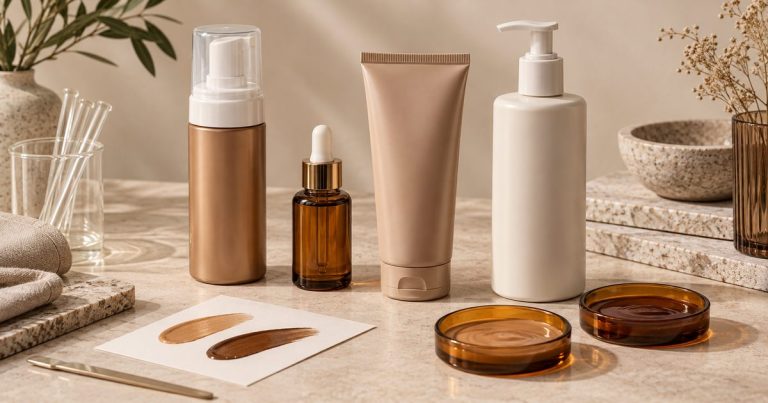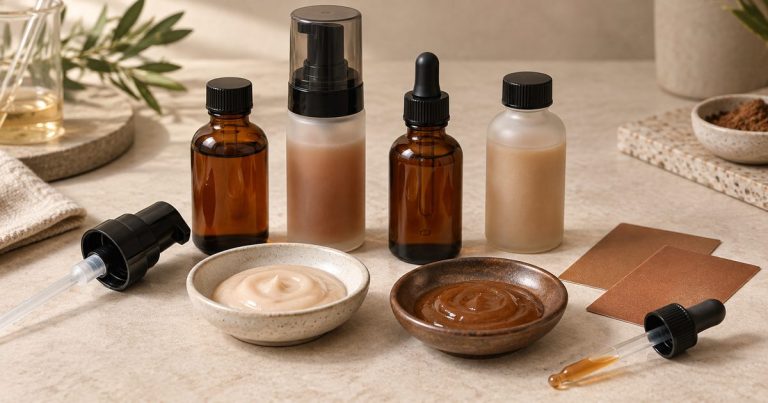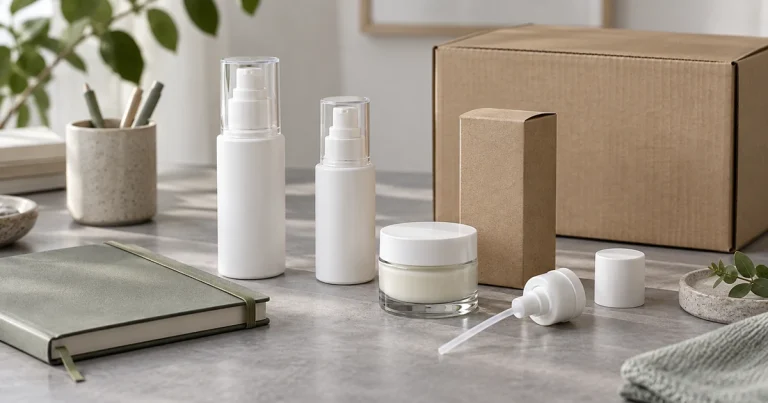

Choose a foamer only after matching the finished liquid, pump, bottle, closure and shipper. Evaluate priming, dose repeatability, foam, recovery, near-empty function, compatibility, leaks and transit damage; a single good-looking pump sample does not prove reliable performance through storage and use.
There is no universal tanning-mousse pump. Share formula conditions, target dose and foam, bottle geometry, closure needs and ship route, then agree written acceptance criteria before approving custom parts or artwork.
Last updated: October 8, 2026
Quick Answer
Choose a foamer only after the finished liquid, pump, bottle, closure and shipper are treated as one pack system. Evaluate first-stroke priming, dose repeatability, foam appearance, recovery, near-empty function, compatibility, leaks and distribution damage. A single pleasant pump sample does not show reliable performance through storage and use.
There is no universal tanning-mousse pump. Tell suppliers formula conditions, target dose/foam, package geometry, closure needs and ship route; agree written thresholds before approving custom parts.
Tanning mousse packaging decision table
| Decision area | Specify before sampling | Evaluate in the filled, finished pack | Risk if skipped |
|---|---|---|---|
| Formula and foamer | Formula version, viscosity range over storage, particles or suspended color, intended temperature range and component materials | Intake, dispensing, foam appearance, clogging, staining, odor or material change | A pump may sputter, clog, dispense liquid instead of the intended foam, or interact with the product |
| Dose and user routine | Target output per full stroke, application area, directions and whether a mitt is part of the system | Priming, stroke-to-stroke output, actuation feel, foam spread and pump recovery | Consumers may need too many strokes or receive an inconsistent dose |
| Bottle and closure | Neck finish, capacity, dip-tube length, lock, overcap, label and retail carton | Fit, torque or engagement, stability, leakage orientation and label/decoration condition | Loose fit, poor evacuation, accidental actuation or transit damage |
| Transit configuration | Sales unit, shipper, inserts, route and fulfillment channel | Leakage, closure state, pump protection and post-transit function | A bench-approved bottle may fail in the parcel or pallet configuration |
1. Treat the Foamer, Formula and Bottle as One System
A manual foamer mechanically mixes liquid with air and dispenses foam through a screen or mesh. Packaging supplier Richmond describes a common two-chamber arrangement, while noting that component designs vary. The pump therefore has to fit both the formula and the bottle.
Share a real sample or controlled formula brief, including viscosity behavior, suspended color or particles, target output and formula-contact materials. Ask the component supplier to identify the pump model, mesh, neck finish, output specification and known limits in writing.
Do not confuse a package nickname with a regulatory classification. A hand-actuated foamer is not automatically a self-pressurized aerosol; have a qualified reviewer classify the final pack and label. FDA separately explains sunless-tanner exposure boundaries and labeling for self-pressurized containers. A foamer format does not remove the need for suitable directions or market-specific review.
INHI’s live Products page lists mousse, gel, cream and drops as self-tanning formats coordinated around shade, finish, fragrance and destination market. It does not establish that one pump, minimum or timeline fits every project.
2. Choose the Pump by Delivery Job, Not Appearance
Choose the actuator and decoration only after defining dose, storage, handling and any locking need.
Pump output, priming and recovery
Specify intended liquid dose per stroke, acceptable priming, output consistency, foam appearance and near-empty function. Measure with the same formula, temperature, orientation and stroke method. ASTM currently lists D3890 for priming strokes and D4333/D4333M for pump-component compatibility; ask a qualified test partner whether and how either practice applies to the selected foamer. Neither listing validates a finished cosmetic.
Bottle geometry, closure and actuation protection
Verify neck finish, dip-tube length, bottle stability, closure engagement, fill level, lock and overcap. Ask for the formula-contact bill of materials (resin, pump pathway, screen, seals, spring and dip tube) and review any later material change. Decoration must not obstruct grip, closure or label area.
3. Qualify Foam and Formula Compatibility Together
The meaningful sample uses the target formula in the proposed pump and bottle—not water or an empty pack. Keep the formula, fill process and pack revision traceable.
Record four groups of observations: (1) priming, dose, pump return and clogging; (2) foam appearance and spread with the intended applicator; (3) actuation, lock, cap and mess; and (4) leakage, formula/pack changes, staining, corrosion and label condition. Agree observation intervals and pass/fail limits in advance; they depend on the formula, bottle, routine and channel. Retain an approved sample and test conditions.
The European Commission’s cosmetic safety-report guidance treats direct-contact packaging characteristics and possible migration as relevant. It notes there is no single standard procedure for cosmetic compatibility studies, so conditions should reflect the actual formula and primary pack—not a generic supplier statement.
For related context, see INHI’s DHA formulation guide and self-tanning format comparison.
4. Design Leakage and Distribution Tests Around the Real Route
Use the filled formula, final pump, bottle and saleable closure. Define sample orientation, handling, what counts as leakage and the pass limit. Record configuration, sample identity and findings; “passed leak test” alone is not a purchasing record.
A practical qualification sequence
| Stage | Configuration | Evidence to retain |
|---|---|---|
| Fit and dispensing | Actual pump/bottle plus filled formula | Component codes, priming, dose, foam and compatibility observations |
| Leakage | Closed saleable unit under agreed orientations/handling | Sample count, leak definition, acceptance limit and findings |
| Transit | Finished unit and shipper for the selected route | Protocol/version, damage or leakage, post-test dispensing |
Do not substitute a standard name for a test plan. ASTM lists the mechanical-pump leakage method D6834-02 as withdrawn in 2017; do not describe it as an active standard. Ask a test partner to select an applicable leak method for the actual closure and pack.
Match the protocol to the route: ISTA 3A covers parcel shipments up to 70 kg; Project 3L addresses generalized e-commerce retailer fulfillment; Project 3M addresses Asia-Pacific direct-import shipments to U.S. distribution/fulfillment centers. They are not interchangeable. Check the ISTA directory and confirm the current protocol with the lab. ISTA advises retesting when a product, pack, filling or distribution change may affect performance (retesting guidance).
5. Cost, MOQ and Schedule: Request a Scoped Quote
There is no verified universal price, order minimum or production lead time for a tanning mousse foamer. Request separate costs for development, bulk/filling, pump, bottle, closure, decoration, carton, testing, documents and freight, and ask which component or setup sets the minimum.
The current INHI Products page states that eligible projects may start from 100 units and that samples are available within 7 days. Those public statements do not establish that every mousse formula, custom foamer, decoration or first-order configuration is eligible. [INHI REVIEW REQUIRED: Confirm whether this specific self-tanning mousse and foamer package meet the published eligibility and sample schedule before quoting them.]
Request milestone dates for brief, sample, formula/pack freeze, verification, artwork, production and shipment. Confirm which custom component controls the critical path, and freeze pump/bottle/label details before final artwork.
Manufacturer-Side RFQ Checklist
Include:
- Market, channel, intended directions and application area.
- Formula/sample, fill volume and viscosity/temperature behavior.
- Foam feel, dose, applicator and bottle/pump direction.
- Lock, overcap, decoration, quantity, target cost and launch milestones.
- Material restrictions, claims direction and test/document needs.
Ask what is stock versus custom, which evidence exists, what remains untested and which minimum applies to each component. Get the sample plan and acceptance checklist in writing before paying a deposit.
Common Mistakes and Procurement Risks
- Approving a pump tested only with water or a different formula.
- Evaluating an empty pack instead of the filled, decorated unit.
- Ignoring lock, overcap or pump protection in the parcel configuration.
- Claiming “leakproof” without defined conditions and limits.
- Treating withdrawn ASTM D6834-02 as a current method.
- Changing pump, seal, resin, fill or shipper after approval without impact review.
- Quoting a finished-unit MOQ without separating component commitments.
- Treating a category page or sample as proof of project eligibility or compliance.
Frequently Asked Questions
Can any foamer pump work with a tanning mousse formula?
No. Match it to the formula and bottle, then test the filled final pack for dispensing, foam, compatibility and leakage.
Is a manual foamer pump an aerosol?
A manual foamer dispenses mechanically, unlike a self-pressurized aerosol. Have a qualified reviewer classify the final package and review directions for each market.
How should I test a tanning mousse bottle for leaks?
Test the filled final pack under agreed orientation and handling, define acceptable leakage, then recheck function after a route-appropriate distribution test.
What should I send a supplier for an accurate foamer quote?
Send market, formula/sample, viscosity, dose/foam target, bottle/pump direction, decoration, quantity, channel and launch constraints. Request a component breakdown, assumptions and outstanding tests.
What is the MOQ and lead time for tanning mousse packaging?
No universal minimum or lead time is verified. INHI advertises eligible projects from 100 units and samples within 7 days; confirm the exact formula, pump and decoration before quoting.
Conclusion: Freeze the Sellable System
Approve the formula, foamer, bottle, closure and shipper as one system. Record component codes, define sample limits, test the saleable pack and review every performance-relevant change before production.
To scope one route, share market, formula/reference, quantity, dose, packaging direction and timing through Start a Project and request a component-level quote plus verification plan.
Sources and References
- INHI Cosmetics: Products, Insights, format guide, DHA guide and Start a Project — public category and inquiry pages (accessed October 8, 2026).
- Richmond Group, Foam Dispensers — common air/liquid chamber and mesh mechanism (accessed October 8, 2026).
- FDA, Sunless Tanners and Labeling Guide — exposure and labeling guidance (accessed October 8, 2026).
- European Commission, Cosmetic safety-report guidelines — packaging contact and interaction assessment (accessed October 8, 2026).
- ASTM, D4333/D4333M, D3890 and packaging catalog — active pump practices and D6834 withdrawal listing (accessed October 8, 2026).
- ISTA, Test Procedures and retesting guidance — route scope and change-triggered retesting (accessed October 8, 2026).
- Google Search Central, People-first content guidance — original, useful and clearly sourced content (accessed October 8, 2026).